
I Am Filled with Lovage
An ode to my favorite herb

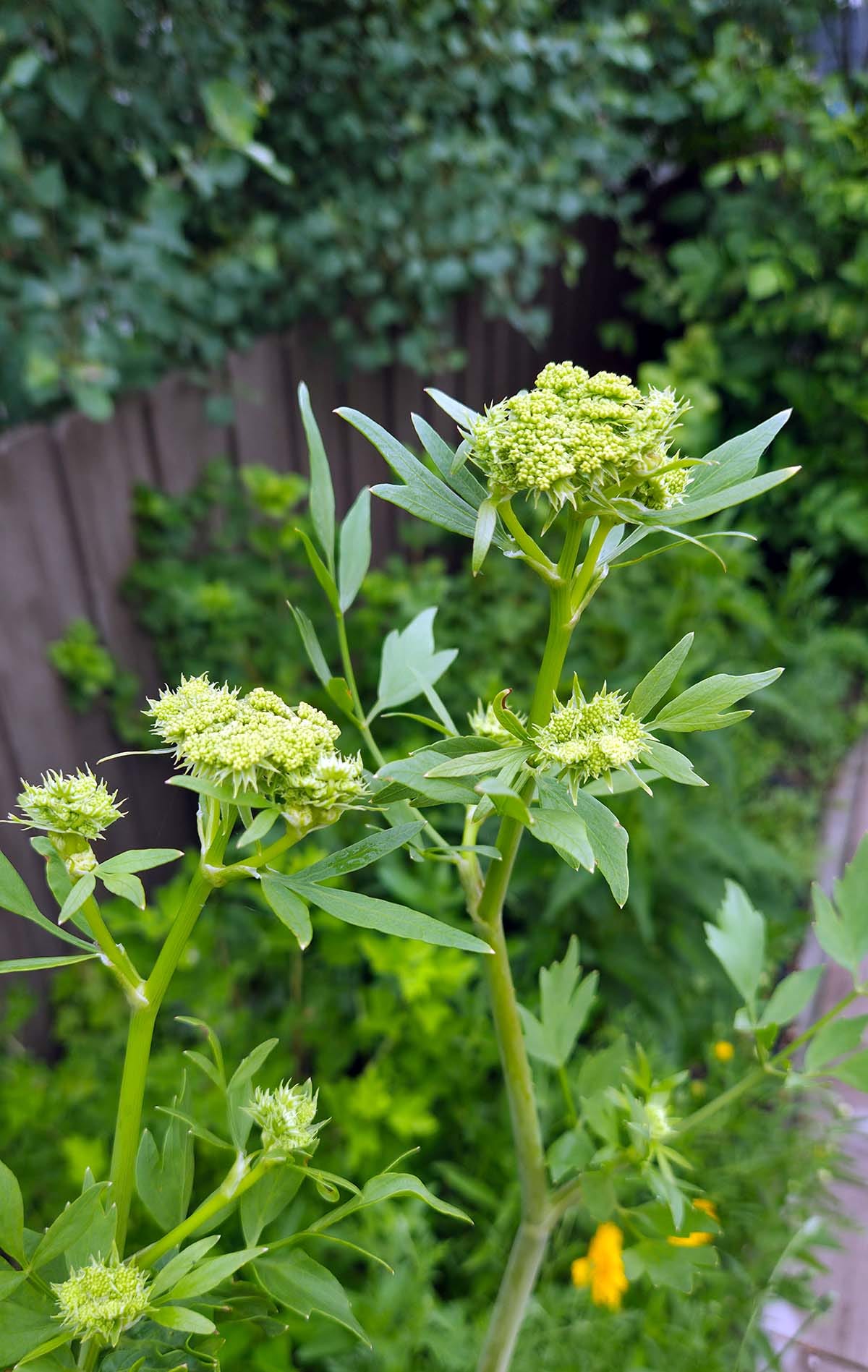
Were I a plant, I may well be lovage.
Not because it’s beautiful, although I think it is rather handsome. Or because it’s fashionable. It isn’t. Or universally beloved. Definitely not.
Lovage is useful. It is versatile. It has been around a very long time. It occasionally overwhelms people. It tends to take up more space than expected.
Eh, maybe this isn’t helping my case…
Levisticum officinale is not an easy plant. It’s too strongly flavored. It’s too big. It takes over the garden. A little goes a long way. Lovage makes itself known. The sun shines on it. If it were to have a zodiac sign, it’d be a Leo for sure. Like me.
Most people don’t know what to do with it. Yet once you learn the Secret Ways of Lovage, you’ll become as devoted to it as I am.
A native of the Mediterranean east to Afghanistan, lovage had its finest moment as one of the chief culinary and medicinal herbs of the Romans, along with rue, angelica, and the enigmatic silphium. The legions brought lovage throughout the empire in antiquity, and it naturalized throughout Europe to the point where most people think it’s native to places like Britain and Sweden.
Christian monks continued to use the herb both in the kitchen and the apothecary, where its versatility showed. You can eat the whole plant: leaves, stems, root, seeds.
If you’ve ever eaten lovage, its flavor is in your mind right now. If you haven’t, it tastes like the love child of parsley and celery, but with a bit of citrus peel and resin going on in the background.
It loves others in the Apiaceae family, especially carrots, parsnips, and celery root. Lovage loves fish and white meat poultry, too, and gets along just fine with rutabagas and potatoes. Bathing in cream, or getting intimate with ricotta as ravioli filling, lovage and dairy are a classic.
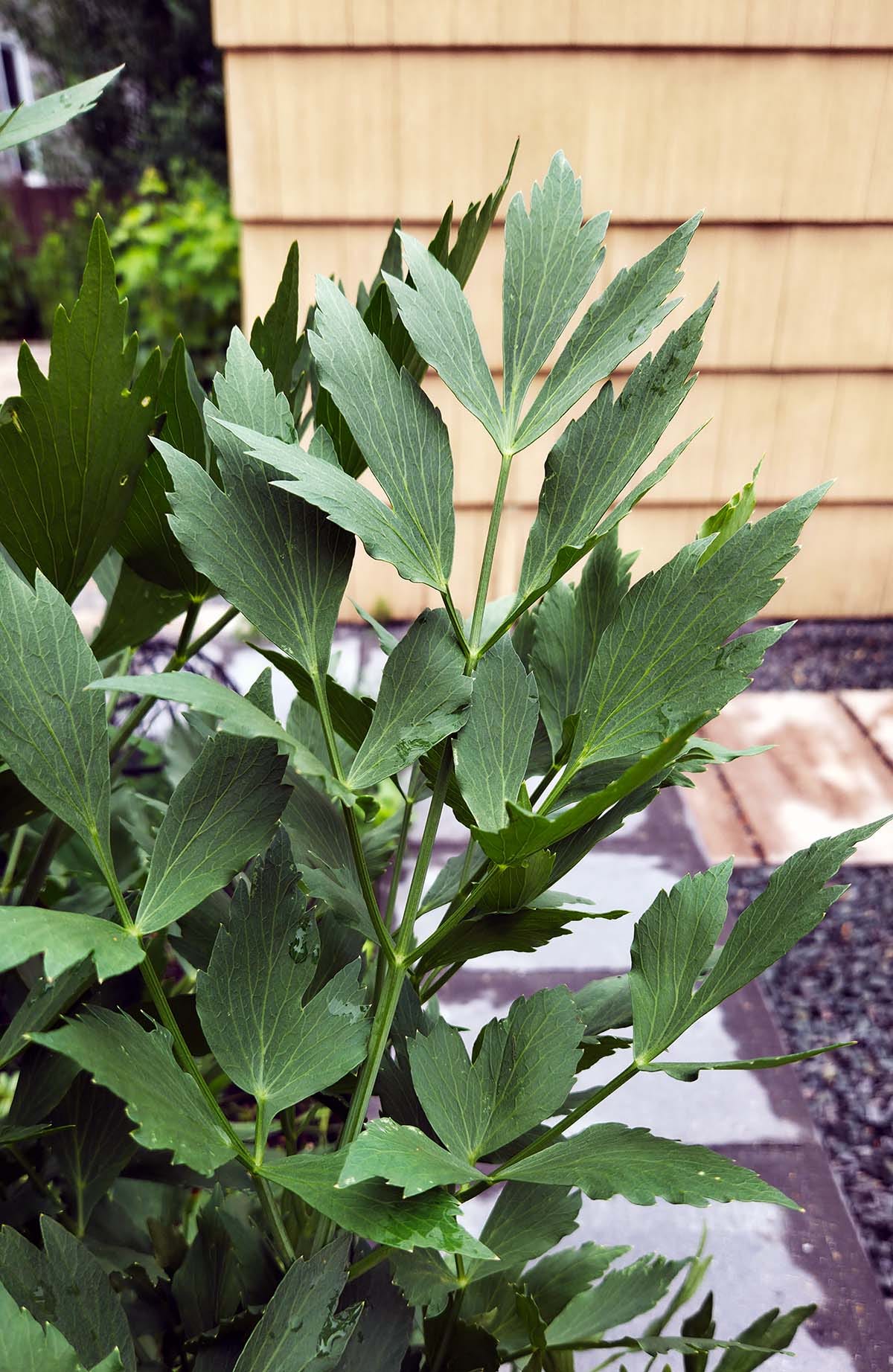
Leaves are the most common way to eat lovage. Looking like flat-leaved parsley, only much larger, a few leaves will season a whole pot of soup. But you can use more. Much more. I once made a lovage bisque for a big dinner that blew everyone’s minds. It was like nothing they’ve ever eaten before… and probably since.
You can also use lovage for a British “parsley” sauce, or use it in place of sorrel for a French lovage soup. I’ve used it in place of parsley for tabbouleh, too.
Try a lovage risotto using it in place of nettles.
Those stems, though!
Lovage grows large, hollow stems that, freshly cut from the plant, make the world’s best bloody Mary straw. I’ve cut them to fit a Mason jar and pickled them, and at least once a year I’ll use lovage instead of angelica to make candied angelica stems, which are astoundingly good sliced into thin coins and scattered on ice cream, or over a bowl of berries with cream.
The smallish stems I simply toss into the freezer for stock.
I’ve made a simple pork sausage flavored only with salt, pepper, chopped lovage leaves and ground lovage seeds. Not only was the sausage amazing, but the natural nitrate levels in the lovage appeared to have cured it enough to give the links an ever-so-subtle hint of pink. Celery is used this way, in the infuriatingly false “uncured” meat industry. (Don’t get me started on that pack of lies.)
The seeds are excellent added to bread, too. And, ground, they add that weird, addicting flavor to anything you sprinkle it on.
Lovage plays harmony in lots of traditional alcohol drinks, but to my knowledge its only starring role was in a special gin by Tanqueray — now discontinued, but if you can get a bottle, treasure it. And mail me one!
The only part of lovage I haven’t eaten is the root, largely because I don’t want to kill my plants for one meal.
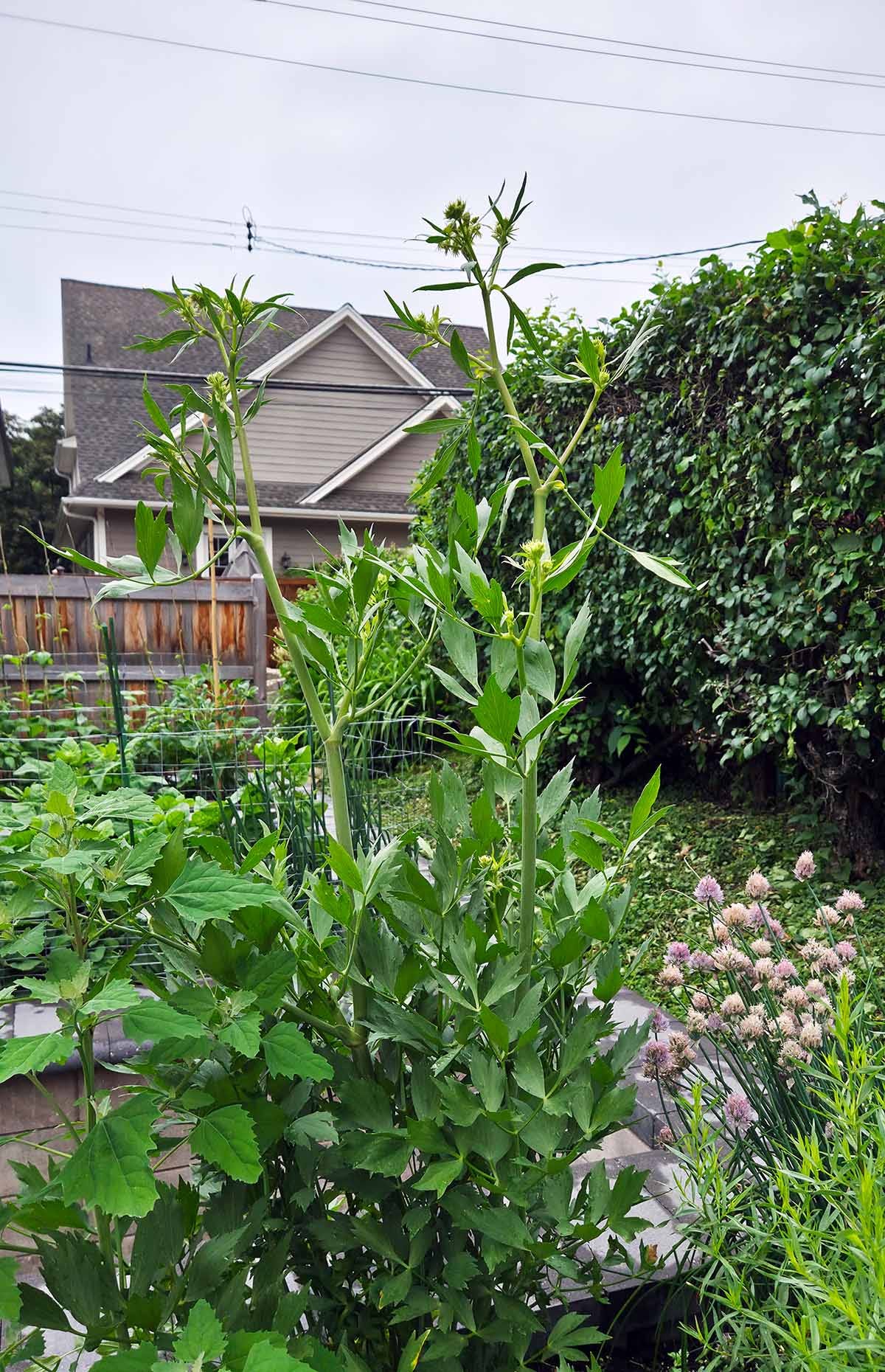
To me lovage is an herb of the North.
It is hardy all the way to USDA Zone 3, and will tolerate up to Zone 9. I used to grow it in Sacramento, where I needed to plant my lovage in the shade. But if you live in, say, Bismarck or Winnipeg, you’ll need a sunny spot for your beloved lovage.
Lovage is long-lived, often surviving generations in the same place.
I came across some while hunting in what, when I stopped and looked around, was once a homestead in the Minnesota Northwoods. It was an eerie, elegiac moment: Ruins of a chimney barely visible. The forest had reclaimed it all. Hanging on were traces of a former life. A rhubarb. An apple tree. And one solitary lovage plant, undeterred that its world had radically changed in the decades since someone loved and cared for it. I crushed a leaf and inhaled its scent — rich, savory, almost animal — then moved on.
Give lovage a few years in the ground and it will grow strong, damn near impossible to kill.
Lovage marries well with German, Austrian, and Scandinavian food for lots of reasons, but my favorite is that its aroma is very close to that of Maggi seasoning, used by most every home cook in those regions. Funny thing: Maggi doesn’t have lovage in it — they just share a lot of the same aromatic properties. Weird, eh?
You can do cheffy things with lovage, too. I have dehydrated the leaves and small stems, then ground them with coarse salt to make lovage salt. I’ve minced the stems and buried them in sugar to make lovage syrup, which is shockingly good. Odd, but good. Puree lovage with a neutral oil until the oil warms, let it sit to settle, then strain and you have a deeply flavored lovage oil.
Lovage is a plant that you didn’t know you needed. It isn’t basil, the flashy supermodel of the herb garden. It’s not parsley, demure and dependable and vaguely boring. It actively dislikes rosemary and tarragon, cooperates politely with thyme, secretly longs for dill — and thinks often about an illicit affair with its cousin, angelica.
You don’t plant lovage because it’s cute. You don’t grow it because it’s trendy.
You grow lovage because once you’ve gotten to know it, living without it feels… diminished. It’s useful in a hundred ways, nourishes bees, survives Minnesota winters and Sacramento summers, perfumes the air with its scent, makes a good soup great, cures boredom, and keeps returning, year after year, with absolutely no interest in becoming smaller, quieter, or more manageable.
And yet lovage is neither a diva nor a bully. It’s just confident.
A lovage plant isn’t trying to be a more fashionable herb. It isn’t trying to be tulsi or shiso or hoja santa or any other au courant herb-of-the-moment. And in the garden, lovage has no interest in making itself smaller so other plants feel more comfortable.
As it matures, a lovage plant simply becomes more itself.
Maybe that’s why I like it so much.
I fell in love with this odd plant after discovering it during spring trout fishing -‘morel hunting .
The woods we were in was loaded with it and wondered what this odd plant was. I crushed up a leaf in my hand to smell it and it was like electricity ran through my senses . What was this and I needed to learn more !
After much research and reading , one of the plants made their way home with me , and has been giving her gifts to me now going on over 7 years now.
Every year I another use and am so blessed to have found this herb. Thank you for the great article and additional recipes
Use larger stems s a straw….for ceasars!