
Coins from Everywhere
I went to Scotland searching for where my family began. I came home thinking about where I belong

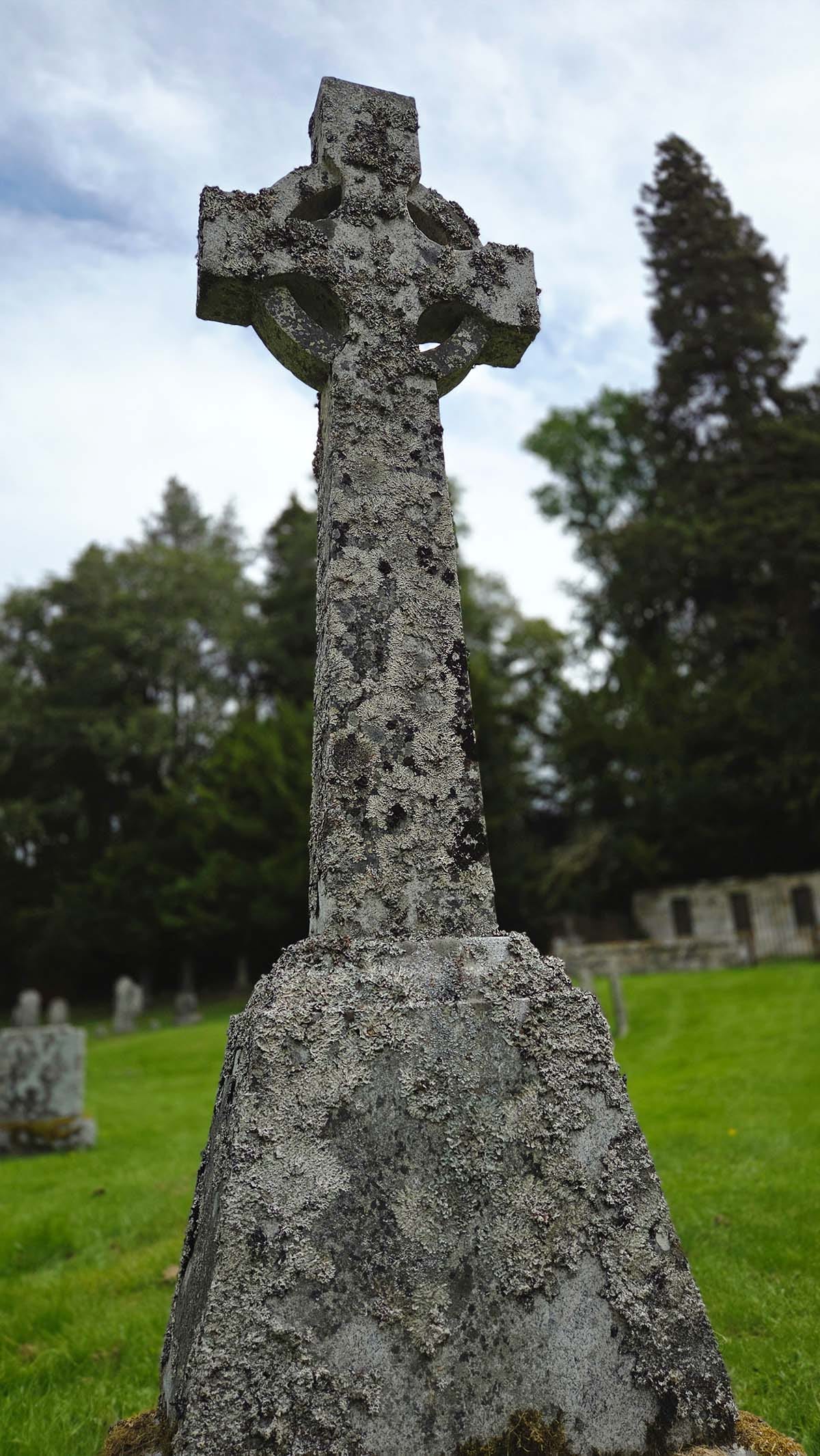
I’d wanted to see my ancestral home in Scotland for decades. Turns out that was a taller order than I had imagined, and it says as much about family histories writ large as it does about my direct line, down to the life I have lived over five decades.
It’s eerie.
A place called Tordarroch was what I had in mind when I rode the train from Edinburgh to Inverness. In my head, this would be a castle, likely ruined, in the middle of the stark tundra that is my mind’s-eye view of the Scottish Highlands: Huge hills, almost mountains. Few trees, heather and grouse and bilberries and riotous color in what I would call muskeg. Sheep. Lots of weed.
Indeed, we chugged through quite a lot of this sort of terrain as the train headed northwest. But when I started digging deeper, I found that not only was the modern Tordarroch not a castle — it is just a nice house — but it was also in private hands. And it was no longer owned by the Shaws. It had been, but that was more than a century ago.
A nearby place called Rothiemurchus kept popping up as the “real” origin point of my family name. It lies within the massive Cairngorms National Park, much of which is as I had imagined the Highlands to be. But Rothiemurchus, near the modern town of Aviemore, was deep in the woods. Not what I’d expected.
And it too was no longer a Shaw place. The Grants have owned it for centuries. The huge estate is now part of the park, open to the public, full of outdoor activities like salmon fishing and hiking and mountain biking. There’s a gift shop even.
After noting that the salmon fishing was a) catch-and-release only; b) fly angling only, and c) wildly expensive, I decided to just hike the place to soak it in on foot.
I had a particular spot in mind: the grave of Seath Mòr, who had been a champion in the clan Chattan confederation. “Bucktooth” Shaw, as he was called, became chief of Clan Shaw after winning a nasty, gladiatorial-style fight called the Battle of the North Inch in 1396. (Interestingly, and probably coincidentally, until I got my teeth fixed, my top two front teeth also bucked out. Family trait?)
Seath Mòr died in 1405, and his grave is in a small cemetery on the grounds of Rothiemurchus. It’s not marked on a map, though. I went to the gift shop to ask if it was accessible. A nice young woman said, “Aye, but it is a wee bit of a walk.” She gave me a map of the estate, pointed to the general area, and asked why I wanted to see it. I told her I am a Shaw and wanted to see Seath Mòr’s grave.
She smiled. “I too am a Shaw. Good luck. And bring a coin for the stones.”
Seath Mòr’s grave has five homing stones atop it, possibly representing the five survivors of the Battle of the North Inch, but no one really knows anymore why these stone cylinders are there. We do know, however, that the Bodach an Duin protects them: He is a spirit who watches over us Shaws and protects Seath Mòr’s grave.
Any non-Shaw who touches the stones will die before their time. It’s apparently happened so many times that in 1983 they placed a heavy iron cage around the grave to protect the stones — and any idiot fool enough to mess with them.
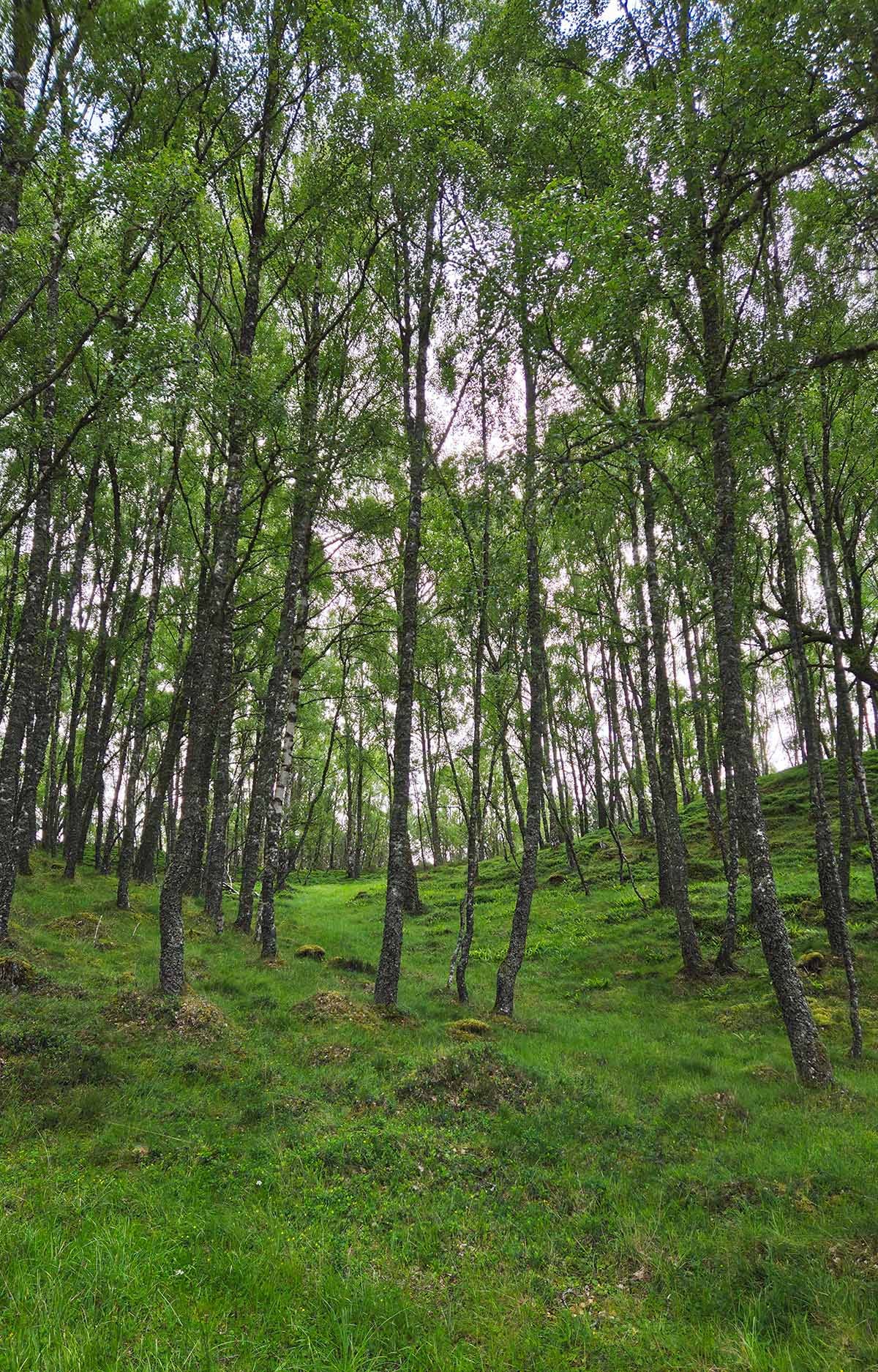
The walk to the cemetery was indeed a wee bit long. And sweaty. But it was a beautiful summer day. The terrain felt like The Shire, or maybe rural Pennsylvania. Meadows, deep woods, old stone fences. Ancient oaks. Pastures with horses and Highland cows and sheep. Stately old homes set back from the modern road.
Just as I started to wonder if my Shaw guide was having me on, I saw a little wooden sign on a fence: “cemetery.” It would not have been visible by car. The fence was locked, but there was a path cut in the grass beyond it, so I hopped the fence and walked through the meadow into the woods. Down a dip along a narrow path, and I could see light ahead. A clearing.
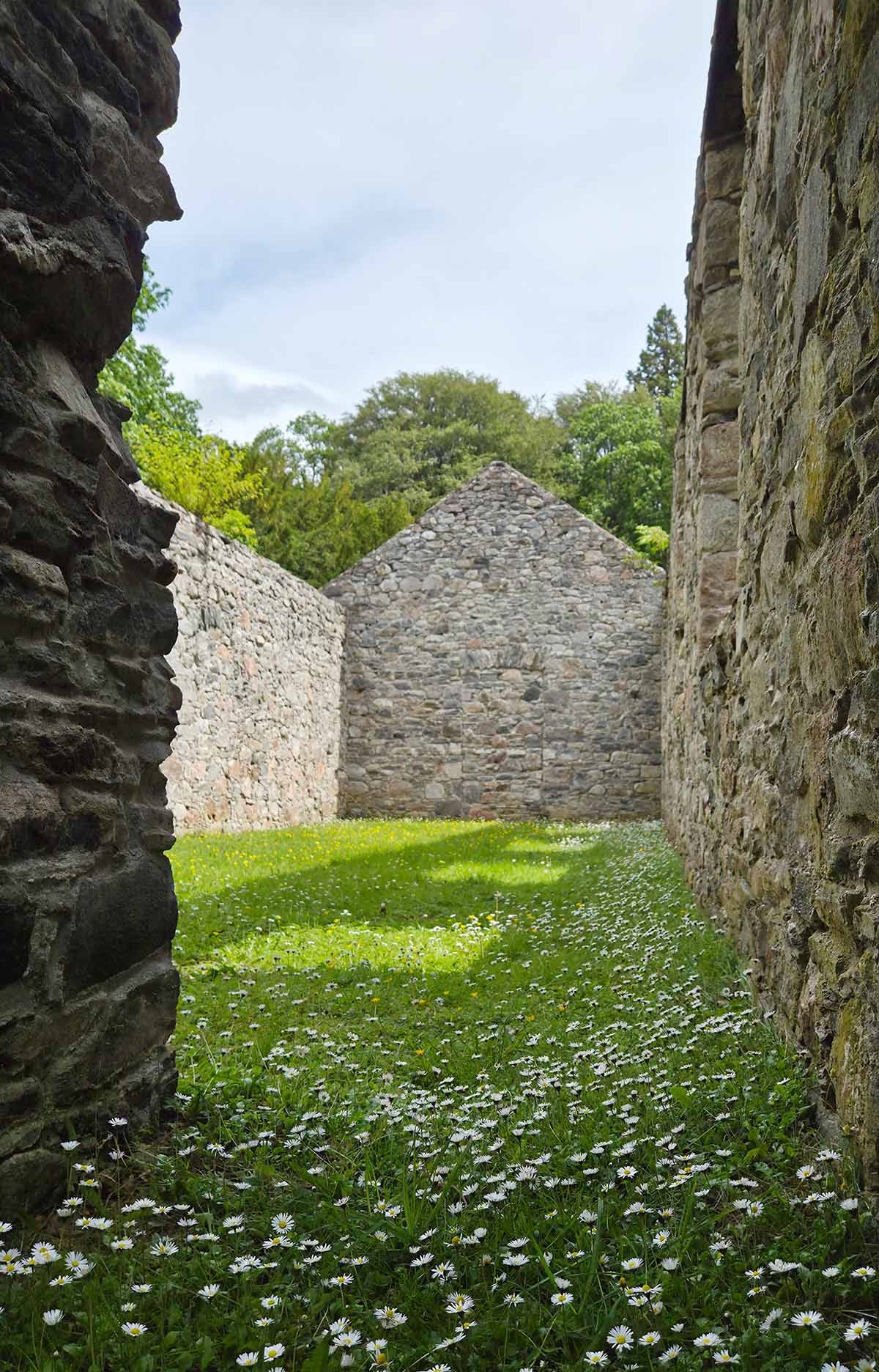
There it was. The cemetery, with the ruins of an old church standing guard.
Flowers everywhere, mostly daisies being pushed up by the graves of my ancestors. Shaws everywhere on the headstones. I saw the iron cage. There was Seath Mòr.
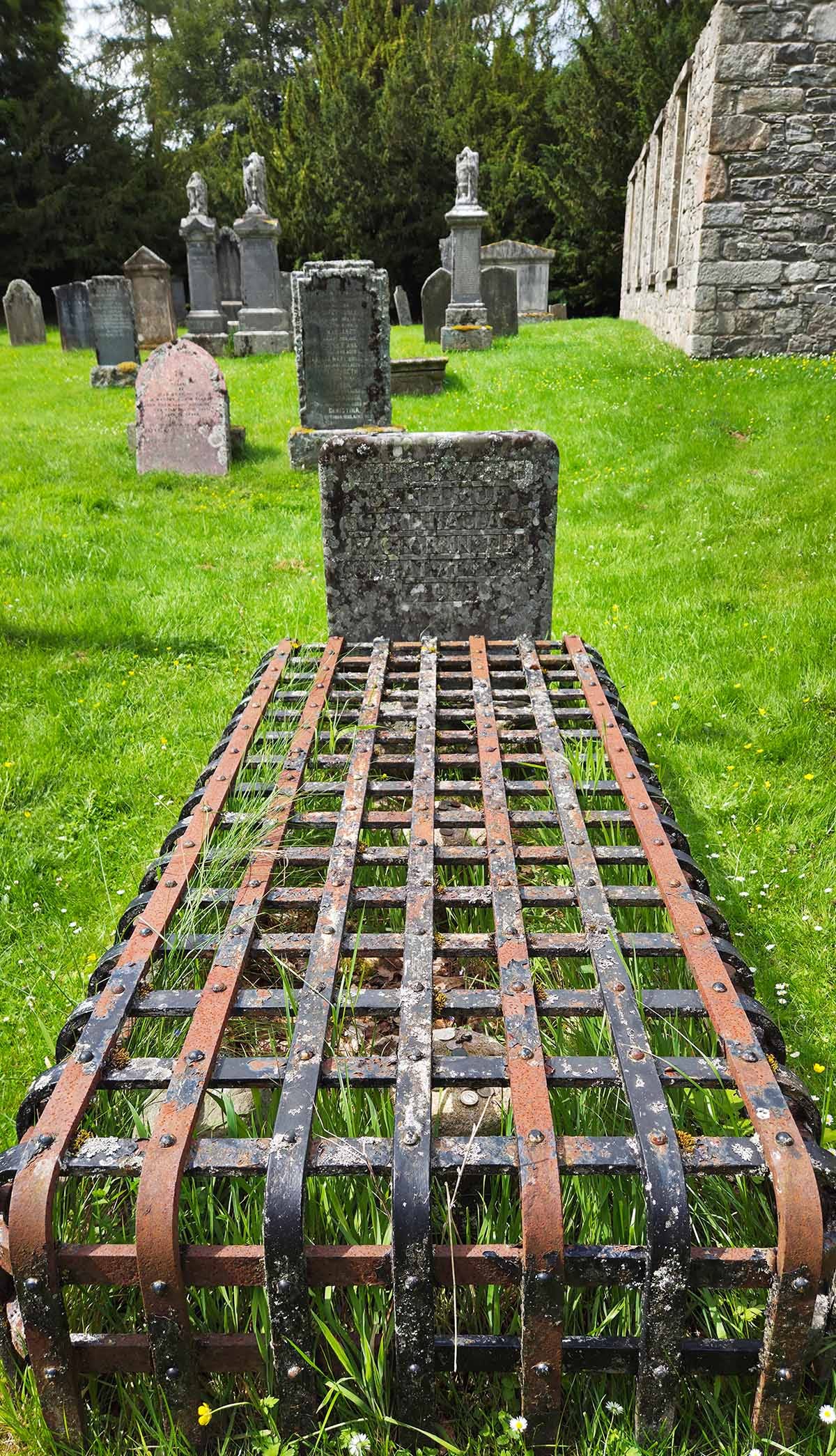
I’d never laid eyes on a 621-year-old grave before. I stood in silence for I don’t know how long. Ten minutes? An hour? A century? So many thoughts flooded in. Where I’ve been in my short time above ground. Where all my family and ancestors have been over more than 600 years. I saw the stones.
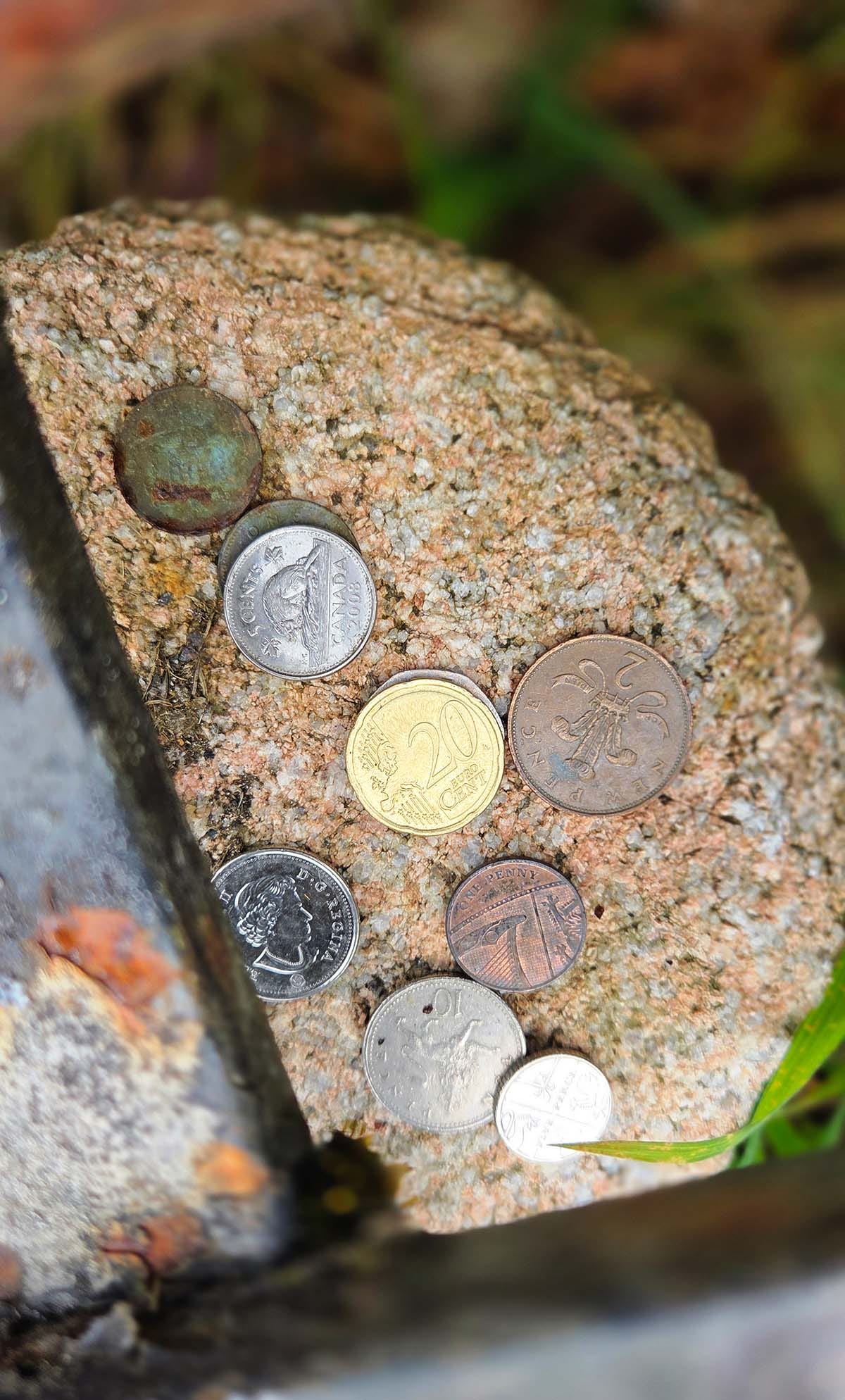
I knelt down. Coins had been placed all over them, some fallen to earth nearby. A few were very old. I saw an Irish penny dated 1929. But what struck me was where these coins were from: England, Ireland, a lot from Canada. But also the United States, Germany, Spain, Mexico, Australia, plus others I could not identify. I reached through the iron grates and set my quarter on one. Rest easy, Seath Mòr.
I walked back toward Aviemore, through the woods of the lands my family once lived on, toward Loch an Eilein, a lake I needed to see.
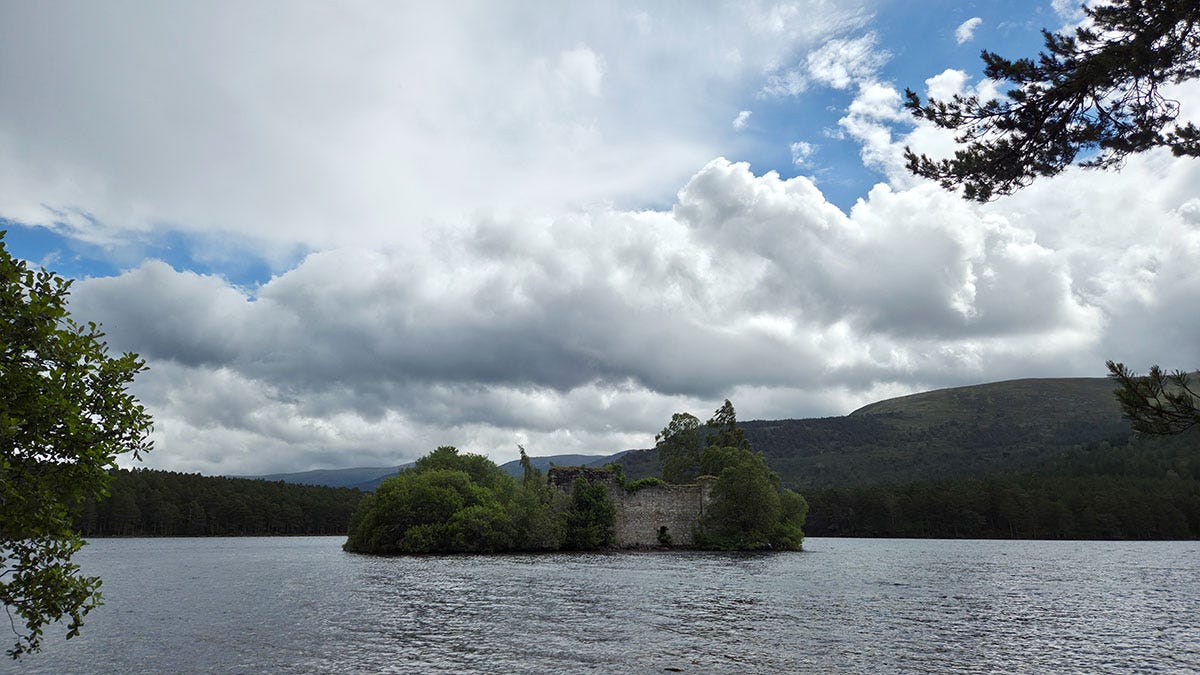
On a tiny island in this lake stand the ruins of a small fort. I’d been told it was the last stronghold of Clan Shaw at Rothiemurchus. It’s not far from the shore, an easy swim, and well within longbow or musket range. I sat on the shore looking at the ruins, taking it all in. Clan warfare shredded Scottish society for so long, and my family seems to have been on the losing end more than once.
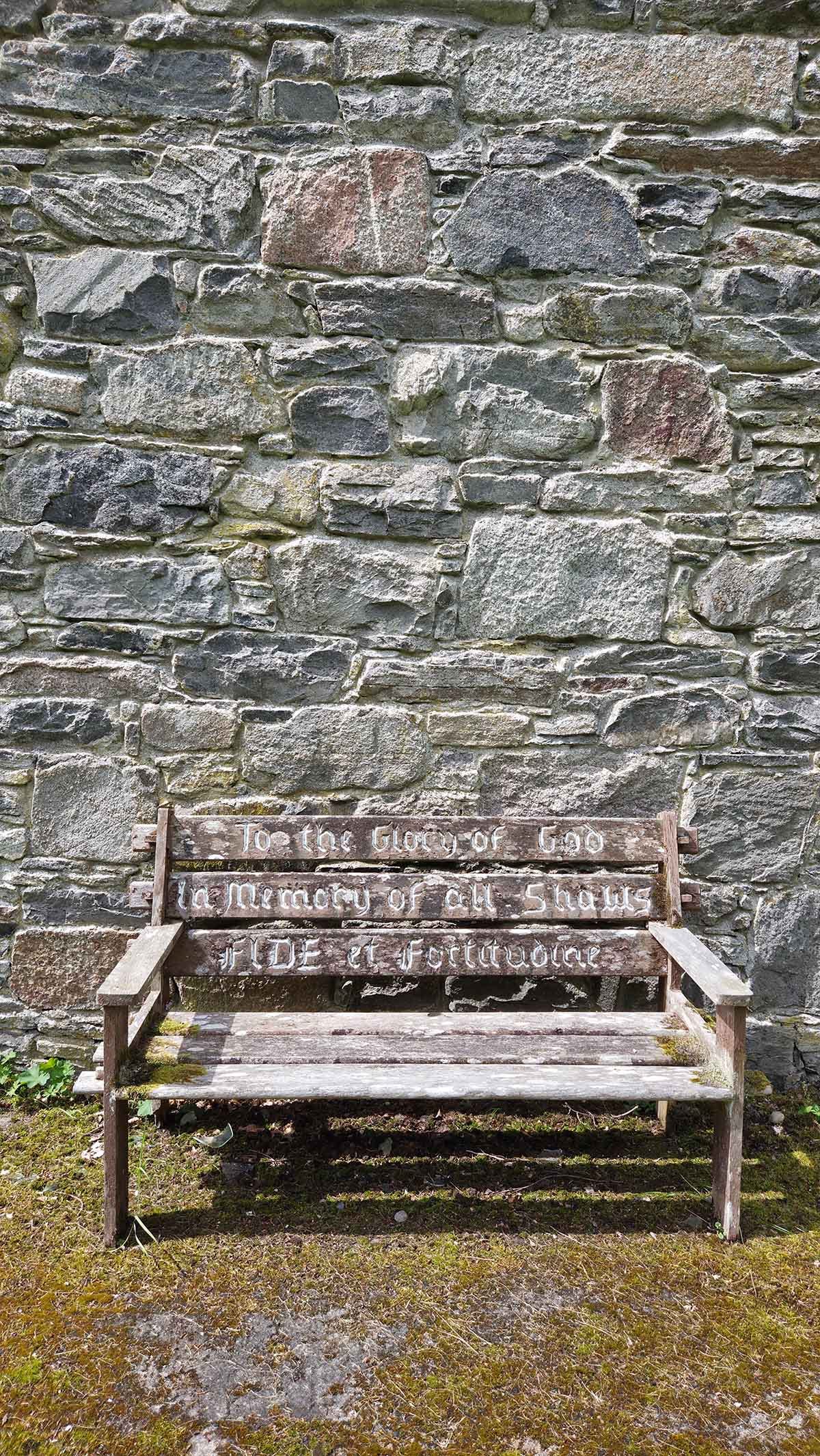
I banished this dark thought, and instead thought about how far flung we Shaws all are. To be sure, not all Shaws are Highlanders. That last name exists in both England and Ireland, and my direct line — great-great-grandfather Joseph Shaw — was born in Ireland in 1847, and like many, many Shaws, moved to Ontario.
Ontario is my more direct homeplace. Shaws have mattered there since the 1790s, and my extended family has lived there until fairly recently; recently enough that I am eligible for Canadian citizenship.
I’ve since learned that the ruined island castle was indeed occupied by Shaws at one point, but its real place in history is as a stronghold of later clans long after our family lost that place. I’ve also learned that our family came to the New World later than family lore, which had us here in the 1600s. Far as we can document, it was in 1770 when Aeneas Shaw, a Tory — that part of family lore turns out to be true — emigrated to New York; he moved to Nova Scotia after the Revolution. But am I even of that line? Does it matter?
Those coins on the stones are the larger story.
The story that we lost Rothiemurchus, then Tordarroch, and had become wanderers, scattered to the four winds, was the one in my head when I arrived in Scotland. And maybe it’s true. But I doubt it. Family history is rarely that clean.
People leave a place for all sorts of reasons. They are driven out. They are pulled toward work, land, love or adventure. They flee wars, bad harvests, bad marriages, bad luck. They follow brothers and cousins across oceans. They change religions, languages, trades and sometimes even their names. A family can rise to wealth, fall and rise again in the span of a few generations. A place that once defined them becomes a story, then a rumor, then a myth.
The farther back in time you go, the thinner facts become. Myth and legend take over. A house becomes a castle. A tangential relative becomes a direct ancestor. An arrival in the 1770s slips backward into the 1600s — and somehow becomes pivotal. Stories gain shine as they are passed down. Many feel they need a coherent past to make sense of their present.
But most of us eventually discover that certainty isn’t what they’re looking for.
Records disappear. Borders shift. The name survives, but the people carrying it become Irish, Canadian, American, Australian, Mexican — whatever the next place asks them to become. They adapt because that’s what you do. Within a generation or two, the children speak differently. Within a few more, nobody remembers precisely why the family left.
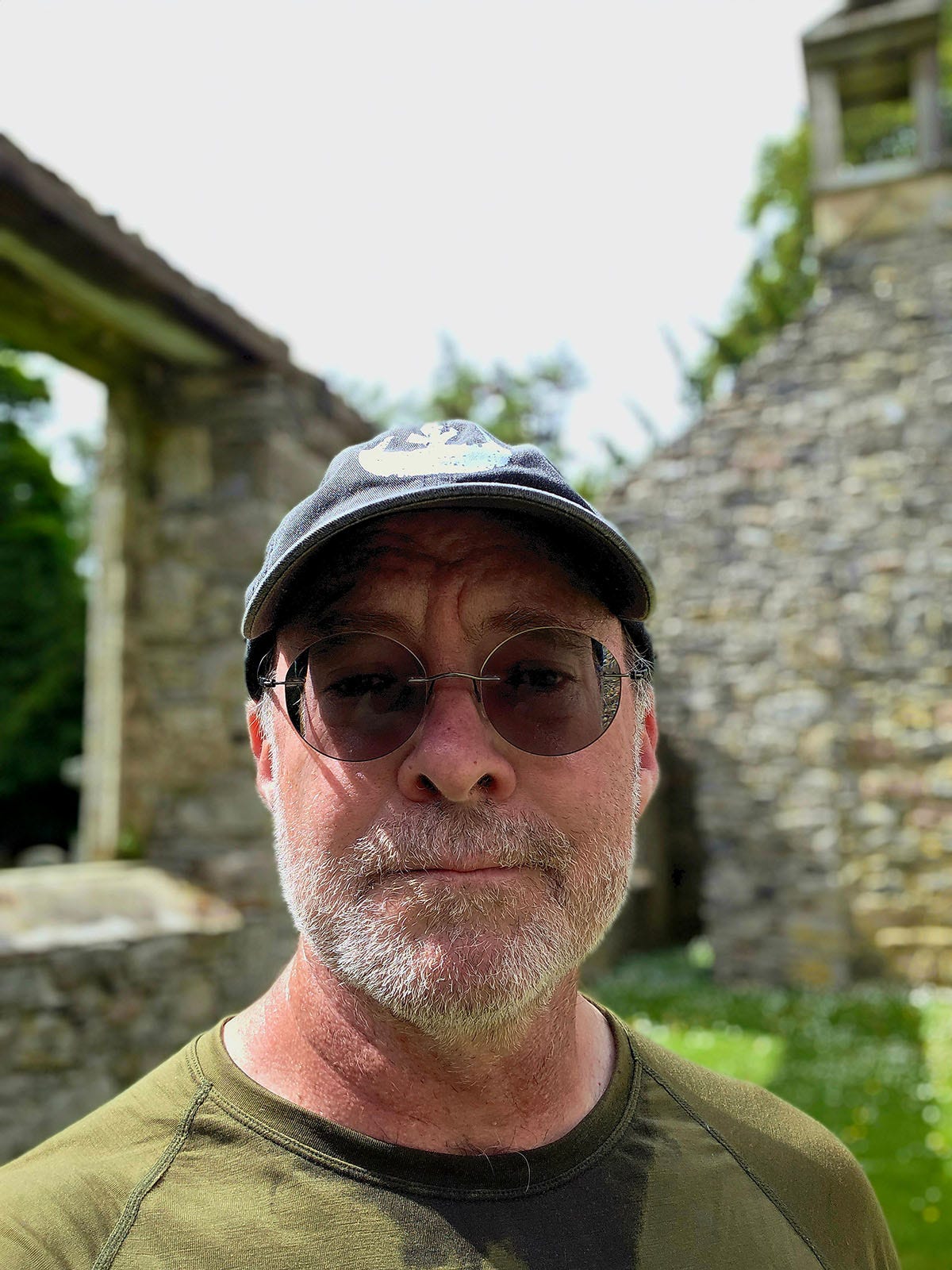
I’ll be honest: I am interested in my Scots heritage, but I identify far more as an American or Canadian than I do with any country across the Atlantic. It’s why it took me so long to visit the “homeland,” if that even is my true homeland. I think I’m like most people in this way: I am where I am. Right now.
But I did go back. And I’m not alone in that, either.
Someone stands in a cemetery reading familiar names on ancient stones. Someone takes a DNA test, visits a village or asks an aging aunt to tell the family story one more time. Someone tries to locate the farm, the neighborhood, the house the family left behind. Usually it is gone, or altered beyond recognition. And it’s always now occupied by strangers.
Maybe that is why those coins moved me. They had come from all over the world, carried there by people who had felt some pull strong enough to bring them to the grave of a man who died more than six centuries ago. Some were Shaws. Some were not. It doesn’t matter, really. Each coin marked the human impulse to reach backward through the confusion and touch something that feels like an origin.
My whole life, I have felt the push and pull of wanderlust against a deep need for a homeplace. I thought that contradiction was mine alone. Or maybe a family trait. But more likely it is not even particularly Shaw.
That feeling belongs to anyone whose family has ever crossed a border, boarded a ship, abandoned a farm, changed a name, lost a language or started over somewhere far from wherever “home” was at that time.
We inherit more than blood and names. We inherit departures. Silences. Half-remembered places. Stories true in spirit even when the dates are wrong. We inherit the human restlessness that has always existed everywhere. We are all wanderers. We all need a home.
I had traveled to Scotland hoping to find answers. A place where my family began. What I found was a private house, disputed histories, a ruined castle that was not quite ours and a grave of a buck-toothed badass, locked beneath an iron cage.
And coins from everywhere.
A homeplace is rarely a place your family has held onto for long — and what really is “long,” anyway? A generation? Three? A century? Three? Home, real home, is more ephemeral, more personal. There is a cliche to that effect I shall not repeat here. But it’s true, nonetheless.
A home is where your own life accumulates. Where you know the seasons, the streets, the people. Where you leave enough of yourself behind that the place begins to remember you. My home is in Saint Paul, Minnesota. It’s not ancestral. But it’s mine.
Beautiful piece of writing, Hank.
I was born in Vietnam, but I’ve been in the U.S. since I was 2. Although I do feel connection in that I still have family in Vietnam, it absolutely does not feel like “home” to me. The local Vietnamese can spot a “Viet Kieu” from a mile away — an “overseas Vietnamese” person — and I am treated accordingly. When my aunt and uncle pass away, there will be some property (not much) passed down to my brother and me. It is our father’s ancestral home that has been in the family for centuries. We have been grappling with the impracticality of trying to keep it when neither us are interested in living in a Vietnam or selling it, which feels like a complete betrayal to our parents’ wishes and our ancestors. Even if we kept it intact, we doubt it would survive our children, who feel even more removed from the culture. Plus, being a communist country, the government could technically come in and take it at any time.