
Against Moral Monoculture

The truth is rarely pure and never simple.
~ Oscar Wilde
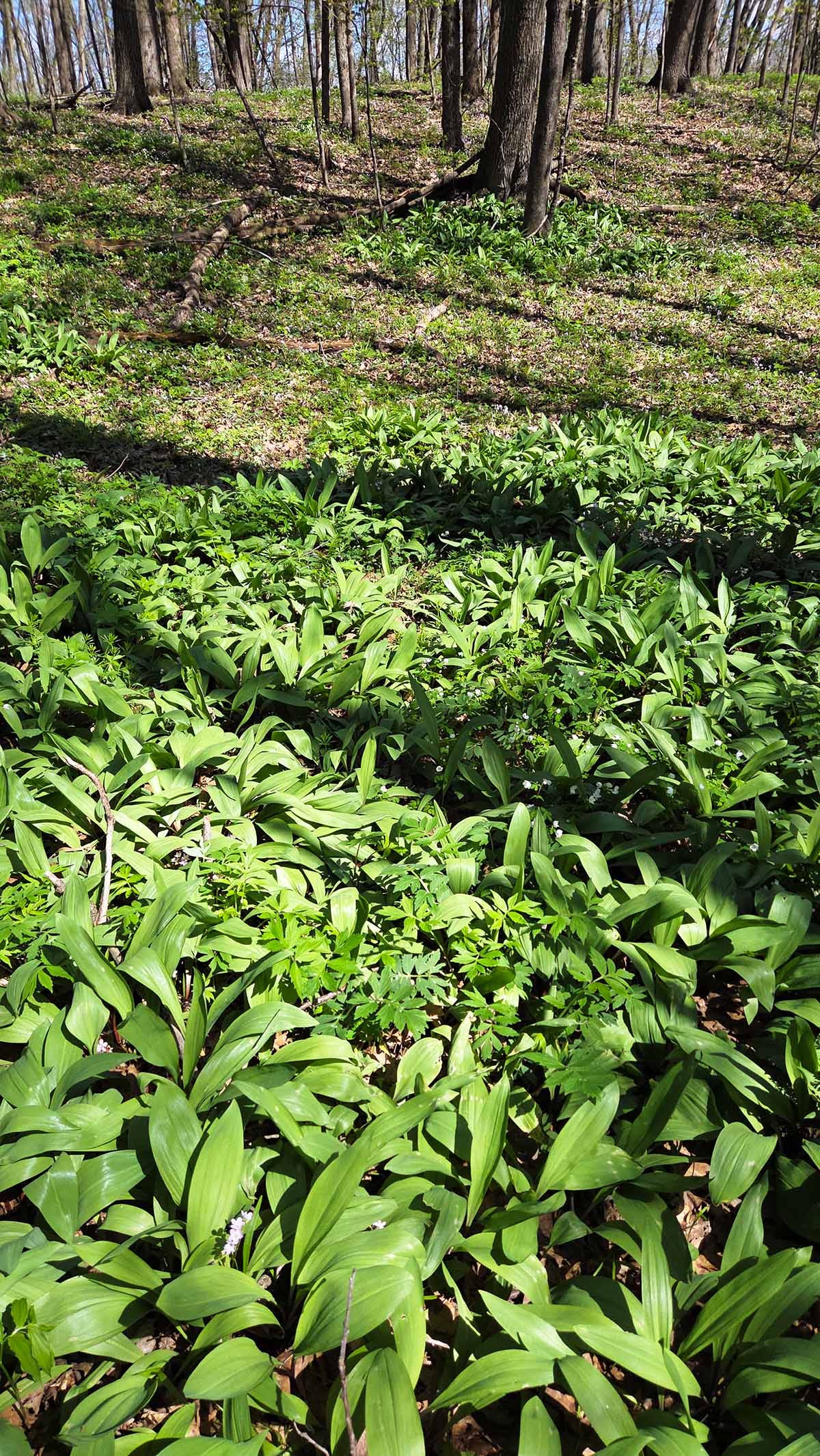
Chances are, if you are a forager in the East or Midwest, you’ve met or heard from someone who condemns picking ramp bulbs with the confidence normally reserved for war crimes.
Didn’t matter where. Didn’t matter how many. Didn’t matter whether the patch covered half a township, or whether the picker had tended it for generations.
Bulbs bad. Leaves good. Case closed.
I’ve seen variations on this theme in hunting and fishing, too. Especially fishing. The single hottest flame war in the history of my presence on social media was when I tried to explain how clean our gillnet fishery was in Alaska by pointing out that in an entire season of netting — tens of thousands of salmon caught — we might accidentally catch four steelhead trout in the nets. I was astonished. That fishery is stewardship in action. And yet…
I can’t speak for the people of other countries, maybe they’re the same, but I can say that Americans suck at nuance. We increasingly treat ethics as branding.
We all want simple villains and simple saints, but fair judgment rewards proximity and demands attention, humility, and yes, sometimes discomfort. It requires us to tolerate uncertainty and competing truths at the same time. Most humans hate that feeling.
This is true in every aspect of our lives: politics, relationships, travel ethics, energy use, foodways, and definitely in the worlds of foraging, fishing, and hunting.
I’m not immune to it.
Texas, almost universally, hunts over feeders. These are elevated bins usually filled with corn that release kernels at regular intervals. There’ll be a blind nearby where a hunter sits and waits for the game to appear, then blamo! Dead thing on the ground.
For years, I looked down my nose at this style of hunting. Until I did it. Much like the dazzling urbanites I poo-poohed who’d said they thought merely pointing a shotgun in the general direction of an animal would kill it, I had thought that ambushing a buck at a feeder would be a chip shot every time. Nope. Turns out critters get wily when they know they’re in danger around that magic corn dispenser.
I’ve seen people hunt feeders for days without getting a clean shot opportunity. And while I absolutely prefer the hike-in, spot, and stalk method of hunting, I don’t honestly see how you could do it in the impenetrable South Texas scrub. That experience made me realize how often we confuse what feels ethical with what actually is.
Sustainability isn’t an absolute. And the more time I spend outdoors, the less interested I become in absolutes.
Of course, there are truly destructive practices out there. I’ve seen them myself. Bottom trawling is basically taking a bulldozer to the ocean floor. But that’s how it was done in the North American cod fishery… until it collapsed. Now the only truly sustainable commercial cod fishery is hook-and-line. But those small operations catch flak from consumers who think they’re still bulldozing the sea floor. They can’t win.
Ditto for bluefin netting versus the New England harpoon fishery. And in a great many cases, our American fisheries are far more heavily regulated (read: sustainable) than their overseas competition — so for many years, American swordfish has been sustainable, but swordfish caught in Asia is not.
We ought to consider scale as well. One person digging a couple dozen ramps is different from a thousand TikTok foragers descending on a public hillside. Different from a commercial wholesaler. Or a chef-driven fad cycle (can’t West Coast chefs use West Coast wild onions?!)
One harpoon boat is different from an industrial fleet.
One buck hunter feeding a family is different from a canned hunting ranch designed for Instagram photos.
Scale is often the real dividing line, not the act itself.
I literally could write you fifty more examples just in the world of wild food — cutters versus pullers in the mushroom world, anyone? — but the overall point is that the world we live in is layered.
When I gather ramps, for example, I only dig bulbs from private ground where I know there will be maybe only one or two other foragers on the land. These spots are wondrous to see, and have been growing larger for generations. Back in California, I had a wild onion spot on public land that I dug for a decade — I don’t think anyone else knew about it, but regardless, it doubled in size over that period.
And yet, despite explaining all this, it seems to not matter.
Then there’s The Algorithm: Nuance performs terribly online.
“Some ramp bulb harvesting is sustainable under certain conditions” gets no engagement.
“REAL FORAGERS NEVER DIG BULBS” spreads like wildfire.
Why? Because moral certainty is emotionally satisfying and socially rewarding.
We all want to feel like we’re doing some good in this world, that we’re not part of the problem… but we all know deep down, that, each in our own way, we are.
Modern life is ecologically compromising by default. We all consume systems we dislike: phones, flights, roads, tomatoes in winter, lithium, industrial agriculture. Nobody escapes clean. Nobody. Certainly not me.
That disconnect hurts, and it can cause us to lash out at people who are, seemingly, committing “easy” transgressions. It makes us feel better. People seize on symbolic moral clarity because the complexity of our modern world makes real moral purity impossible.
And I am not saying that there is nothing in our world that is condemnable. Bottom trawling would be right up there in my book, as would trophy hunting where you don’t eat the animal you’ve shot. Or yes, strip mining ramps in a public forest.
How much of all this is just aesthetics?
Scaling a mountain in search of elk feels noble. Hunkering down in the Texas scrub feels cheap. But at the end of the day, it’s a dead animal… if we are successful. Who’s to say which animal, or which hunter, is more honorable?
I keep thinking about “my” onion patch in the El Dorado National Forest of California. Yes, it was on public land. Yes, anyone could have, in theory, harvested from it. But they didn’t. I would have known. I was the steward of that patch. And even though I dug maybe ten pounds of bulbs a year from it, taking only the largest and returning their bulblet children to the soil, that patch flourished because of my stewardship, not despite it.
That’s not sexy. It’s not something you can put on the ‘Gram. But it’s real.
it's easy look down your nose at something when you think you have your head up in the clouds when it really is up somewhere else
Thank you, Hank! This is an excellent examination of these controversies. Yes, nuance is definitely ignored.